
What Month Is the Great Migration for Wildebeest in Kenya
What month is the great migration in Kenya? What time of year is best for wildebeest migration? However, the wildebeest migration is one of the world’s great natural spectacles, which is an annual movement by millions of wildebeest accompanied by numerous numbers of zebras, Grant’s gazelle, Thompson’s gazelle, impala and eland. All can be seen crossing to the greater Maasai Mara from the Serengeti ecosystem.
Their migration is due to looking for fresh pasture for breeding; they cross over through the Mara River from Serengeti in Tanzania. What month is the great migration in Kenya?
The great time for their migration starts from July to October when Mara welcomes millions of migrating wildebeest and zebras from the Serengeti in Tanzania to Maasai Mara in Kenya. During the wildebeest migration, it’s when you can witness how the constant battle for survival makes the migration season an exhilarating time to explore the untapped wilderness of the Maasai Mara.
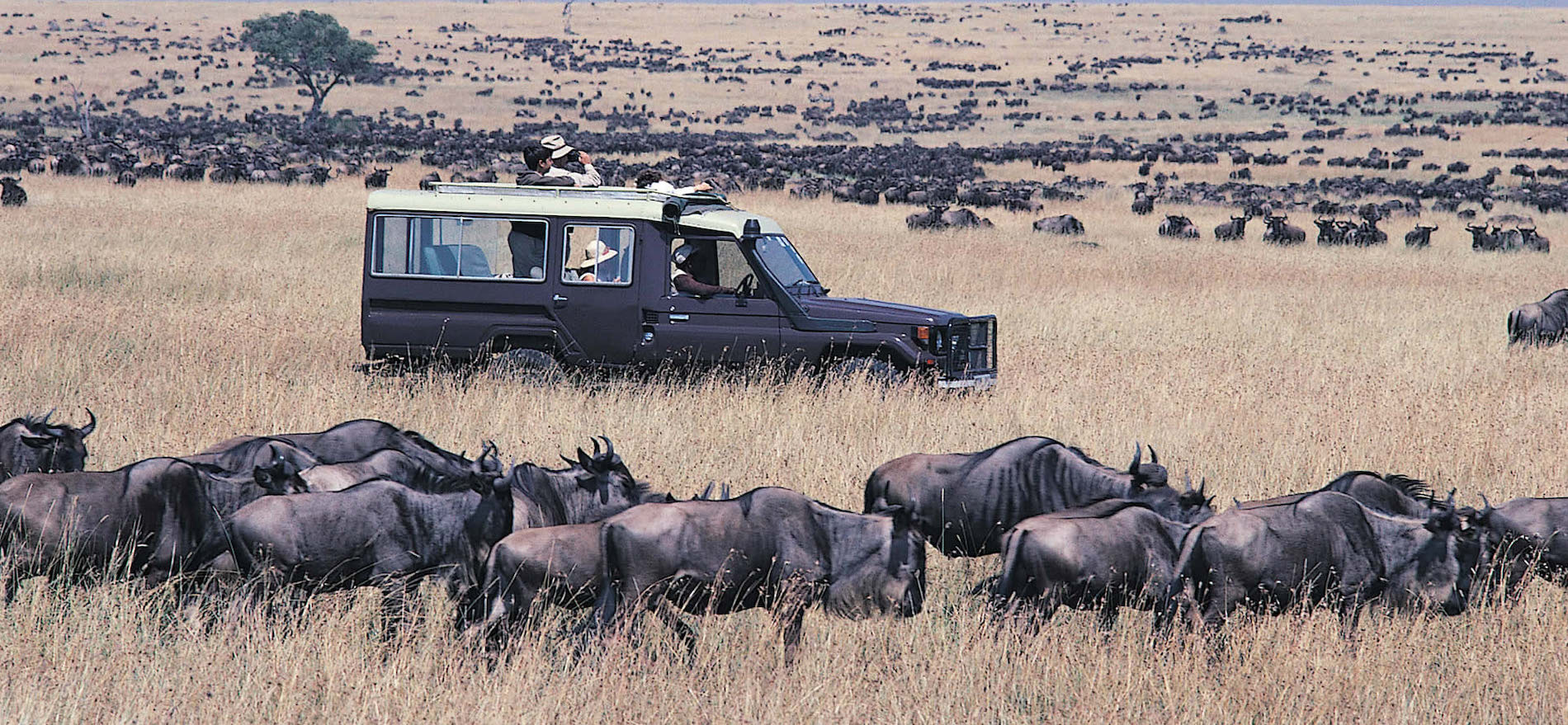
The fact is that the Mara River crossing of this wildebeest is an exceptional life event that will take you through a range of emotions, excitements, headaches, inspirations and so on. Just know, a sheer sight of the first herds of mammals rushing into the crocodile-infested river will make you long for adventure with this incredible wildebeest migration every year.
Nonetheless, it’s a great adventurous experience where you can be able to watch a variety of species; it’s more rewarding in a hot air balloon, where you feel a great sense of relief and joy. You can stop for a short while by prowling and stalking predators such as lions, cheetahs, leopards, and hyenas waiting around the upper banks of the Mara River.
For those animals that can reach the greater plains of Maasai Mara, their life become easier but only for a relatively short time due to their duration of migration. If the pasture fades away, they continue their ongoing return journey with the crossing of the Mara River again.
When the rain returns, it fertilizes the area of the ecosystem that supports the species like gnus, zebras, gazelles and elands; it continues their transitory journey to the prime grazing grounds in the northern and eastern Serengeti National Park that occurs from the middle of October through early November.
You can choose to do a balloon safari, which is a once-in-a-lifetime experience where you can ascend the sky and enjoy the beautiful features before your eyes with a rewarding view of rolling hills, meandering rivers and lush plains.
Where does the wildebeest migration start from?
The wildebeest migration starts from Serengeti National Park in Tanzania and migrates into the Masai Mara for the sole purpose of following the rainfall. Then the calving starts from December to March. They always start their cycle in the Southern Serengeti area of Ndutu and follow wherever the fresh pasture is.

Where to stay in Maasai Mara National Reserve
The park has a range of accommodations varying from luxury, Mid-Range and budget to camps. They are based on a comprehensive set of good amenities, room quality, facilities, service, cuisine, size, location, among others. Lodges are located in Northern Maasai Mara, Eastern Maasai Mara, Southern Maasai Mara, Western and Central Maasai Mara.
Some of the lodges in Maasai Mara include Central Masai Mara Lodge & Camps, North Masai Mara Lodge & Camps, East Masai Mara Lodge & Camps, Mara Engagi Wilderness Lodge, Mara Aduwa Eco Camp, Rhino Tourist Camp, among others.
However, Maasai Mara National Reserve is best visited from July to October, considered the best time of the year, and game viewing is rewarding at this time as there can be plenty of predator and prey interactions. But tourists can visit the reserve at any time of year.
Get started planning for the great wildebeest migration, as the best time to go on safari is from June to August or January to March. The peak season of the wildebeest migration from late June to August or early September.
