
What to avoid doing in the wild
If you’re going to Africa, chances are you want to trek the wildebeest migration or tick the Big Five off the bucket list. While there’s so much information about what you should do on safari – game drive, a bush walk, a balloon safari… or anything to elevate your safari experience, little is said about the don’ts. In this blog, we focus on what to avoid doing in the wilderness.
Feeding the animals.
In a zoo, you can feed giraffes with special feeding dishes and or monkeys with bananas. But in the wild, feeding is strictly prohibited. Why is this? This act disrupts animals. This may result in animals getting too close to safari vehicles, expecting some food. Moreover, animals can find their own food.
Feeding may also lead to the transmission of diseases. The consequences of feeding animals are devastating to us, your tour operator. Your guide may lose his license or us. And your trip may be halted and even banned if you do so frequently.
Taking a flashy photograph
Everyone loves that beautiful photo of wildlife. But as you capture fascinating moments, turn off the flashlight. The flash not only gets animals nervous but also annoys them. Some may react seriously. For instance, elephants are more likely to charge when they spot a flashlight. Same as lions and buffalo.
Flash pictures also scare away other animals. If your camera is flashy, it’ll be very difficult to capture shy animals, such as aardvarks, pangolin, and bat-eared foxes. They often disappear after feeling something strange. A flash will scare them away from you.
Wearing the wrong colors
Though we often provide an updated safari packing list, we are here to remind you. Dark blue and black colors are magnets to tsetse flies, an African endemic insect, which is a vector for sleeping sickness (trypanosomiasis).
Other colors we discourage wearing are red, yellow, white, and orange. They are bright, which means you’ll stand out and startle the animals. These colors are also attractive to bugs. You may be bitten more frequently.
Camouflage color is not allowed in Tanzania. This color is used for defense personnel like soldiers, the police, and prison officers. You may get into serious trouble if caught with it.
Taking anything from the park without permission.
There are many attractive things in the wild. You may be tempted to take them, be it a flower, little animals, animal remains, or anything that doesn’t belong to you. This rule is for protecting nature in its entirety, and it reminds us to avoid being so selfish as to take something that pleases us out of the park.
Going into the wild with pets.
Yes, you love your pet, but don’t take it into the wild. It’s prohibited and it’s not safe. Consider this: you’re in the middle of the Serengeti observing a large pride of lions, and as you focus, your dog barks. The scene is ruined, and it just annoys some of the most dangerous predators. So, it’s your turn to silence it.
Going with a pet may also result in either the pet getting infections or wild animals. Every creature adapts to the environment – the pet is well-adapted in town, while wild animals are used to living in the bush.
Not listening to your guide.
The guide is a well-trained expert ready to take you through the wilderness safely. So, listen to him. It can be a little request like getting out of the car, but it may be costly when ignored. For instance, some places are extremely dangerous, jam-packed with aggressive snakes and injured animals. Once you step out of the car, you may be in serious trouble.
Wearing strange perfumes.
Having a decent smell is uniquely amazing. But what perfume are you wearing? Because the wild has its own smell, not similar to synthetic ones. So, if you wear strong perfumes, some animals will avoid you, while others may attack you. Things get so serious when you pass near honey bees.
Shouting or speaking loudly.
It’s harder to keep quiet when watching the wilderness. You may want to show your friend or partner. Please do it quietly; otherwise, you will ruin the scene. Shouting like football fans is also not good.
Going off-road.
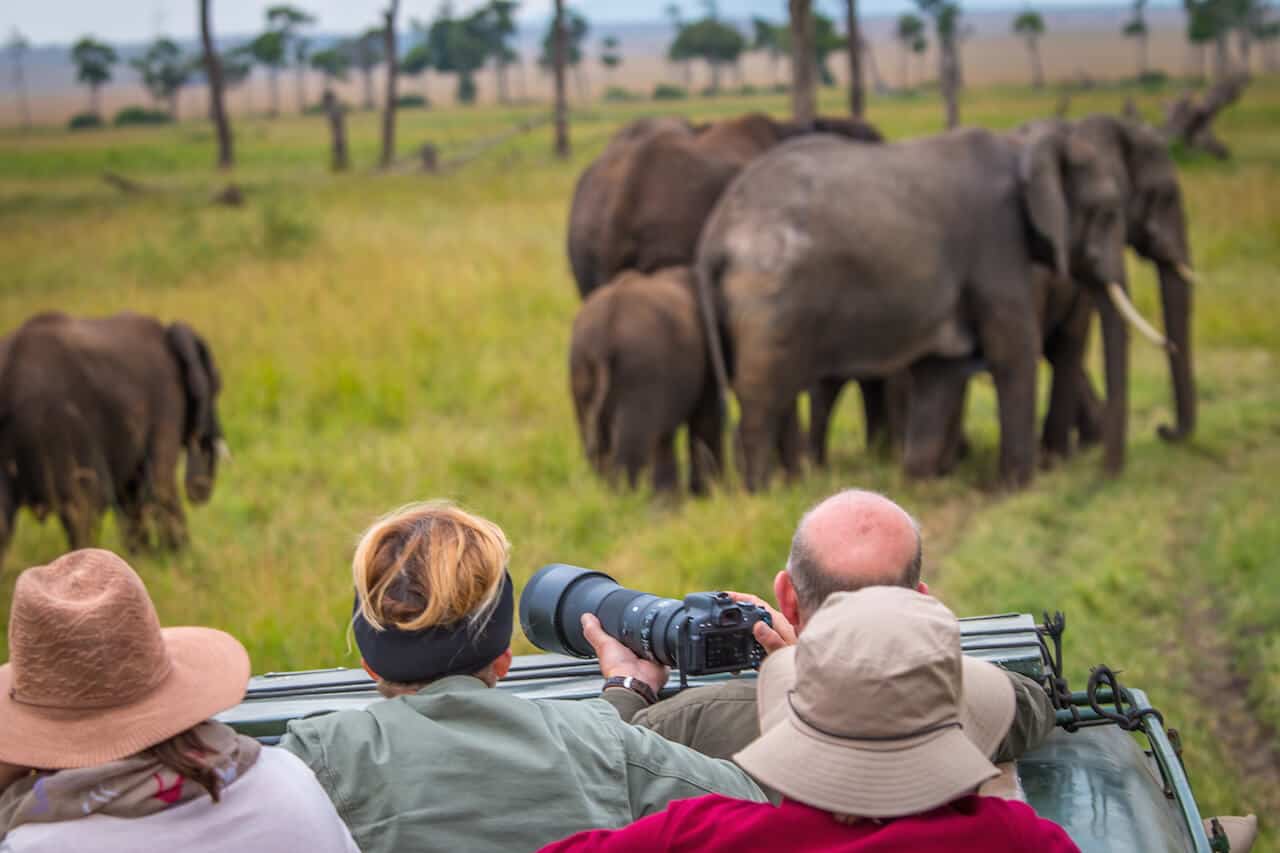
As you drive, please keep on track, never go off the main trail. You may be fined and even be banned for doing this. If you want to go off-road, stay in private concessions, like Singita Grumeti Reserve, Mwiba Reserve, and Loliondo, all adjacent to the Serengeti.
Smoking.
Smoking endangers wildlife as it may result in serious wildfires. It’s therefore prohibited except in designated areas, such as in lodges or camps. Please confirm if the lodge you’re going to accepts smokers. (We’ll help you with this).
Littering.
Littering foreign materials into the wild. And before you notice their impact, a zebra or wildebeest may be harmed by a carelessly disposed of plastic bag. Our vehicles have a dustbin, which you can dump waste into during a game drive.
Plan your safari today.
As of now, this is the only thing you can do to explore wildlife-rich parks in Tanzania. We’ve known Tanzania for years. And we’re ready to take you there. Let’s plan your safari within a few seconds.
