
How Often Do Gorillas Give Birth & Other Gorilla Facts?
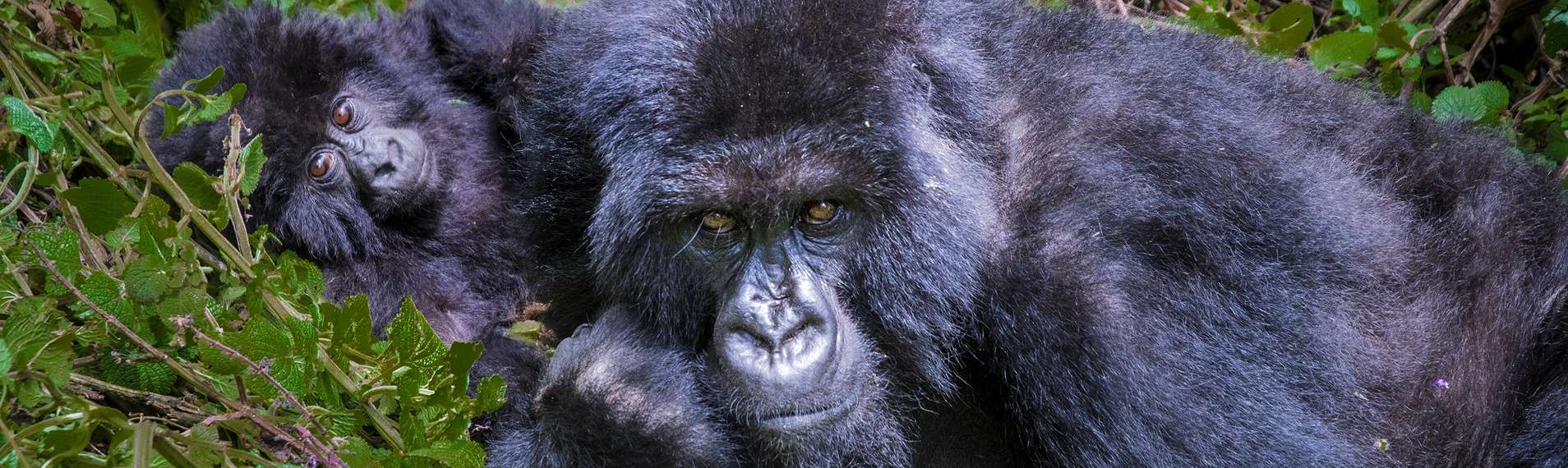
How Often Do Gorillas Give Birth & Other Gorilla Facts? How often does a gorilla give birth? Female gorillas undergo a gestation period of 8.5 months and nurture their young one for several years. In general, mother gorillas give birth to one baby every four to six years. And this slow population growth makes it harder for mountain gorillas to recover from any population decrease.
Gorillas are the most intelligent mammals; in the wild, they can be found in central and East Africa. These are very species that often exhibit behavior and emotions similar to the human experience, such as laughter and sadness. Though they tend to face threats of poaching, diseases and habitat destruction, WWF is working hard to designate new protected areas where populations can be safe.
What do gorillas eat?
Gorillas feed on stems, bamboo shoots and fruits, ants, termites and small insects and break open termite nests to eat the larvae.
Do gorillas live alone?
Gorillas move in family groups that range to more than 30 members. A dominant male “silverback” leads the group and holds the position for years.
How big do gorillas get?
Adult male gorillas weigh up to 440 pounds and can access a height of six feet when standing on two legs. Mature male mountain gorillas are called “silverbacks” for the white hair that develops on their backs after 14 years of age.
Does Wildlife Crime Affect Gorillas?
The illegal trade of gorillas and other great apes is the problem across Central Africa. WWF works with partners to monitor this trade and advocates for those who effectively enforce wildlife laws.
How many offspring does a mother gorilla have?
You might be wondering how many infants female gorillas have. In most cases, female gorillas give birth to one infant annually, with twins being a rare scenario among both mountain gorillas and western lowland gorillas. Although Uganda has experience already with twin births in Bwindi National Park.
Due to the high mortality of about 40% for new gorilla babies, an adult female usually survives with one offspring, and they mature every 6 to 8 years. As a result, many mother gorillas only manage to have 2 to 6 gorilla babies / offspring in a lifetime.
Fun facts about baby gorillas and their birth
The researchers discovered that infant gorillas are usually smaller than human infants at birth.
Gorilla females have a gestation period of around 8.5 months long, and gorilla infants weigh between 1.4 and 1.8 kilograms at birth, which is half the weight of an average human baby.
They can grow faster to maturity, about 12 years. And by the time they turn adult, they weigh more than the average human being.
Infant gorillas commonly stay under the physical care of their nursing mothers for between 5 and 6 months. Gorilla mothers always keep in much closer physical contact with their young ones for about 6 months after they are born to keep them safe during foraging, travelling and active times and provide comfort for their infants.
As infant gorillas turn 3 months of age, they start playing with objects and acquaint themselves with their environment. When they turn about 8 months, they start exploring walking within a few feet from the mother till they are old enough to move further from their nursing mothers on their own but in the company of their siblings.
The female gorillas become sexually mature at the age of 10 years. When they access this period, female mountain gorillas usually give birth to one infant every 4 years.
Research also shows that about 26% of the gorilla babies can die in the first year, most especially if the mother tends to shift to another gorilla family/group with her infant. The silverback in the new family or if a new silverback joins up with the current group, this will frequently kill the new infant as keenly observed in the mountain gorillas of the Virunga Volcanoes.
Female gorillas make the first move towards the male gorillas for mating. They are sexually accessible in the estrous period. They have an estrous cycle that lasts 28 days, starting right after giving birth, and they stop ovulating for many years.
Mountain gorillas do not have a specific breeding season and infants are produced throughout the year. If gorillas were not threatening, their population would be higher than that of human beings. Such threats include habitat loss, poaching and disease transmission. However, gorillas have a high infant mortality rate, although 60% die before their sexual maturity.
Where can one trek mountain gorillas? – Safari
In Uganda mountain gorillas can be trekked in Bwindi Impenetrable National Park and Mgahinga Gorilla National Park; in Rwanda, in Volcanoes National Park and Virunga National Park in Congo.
